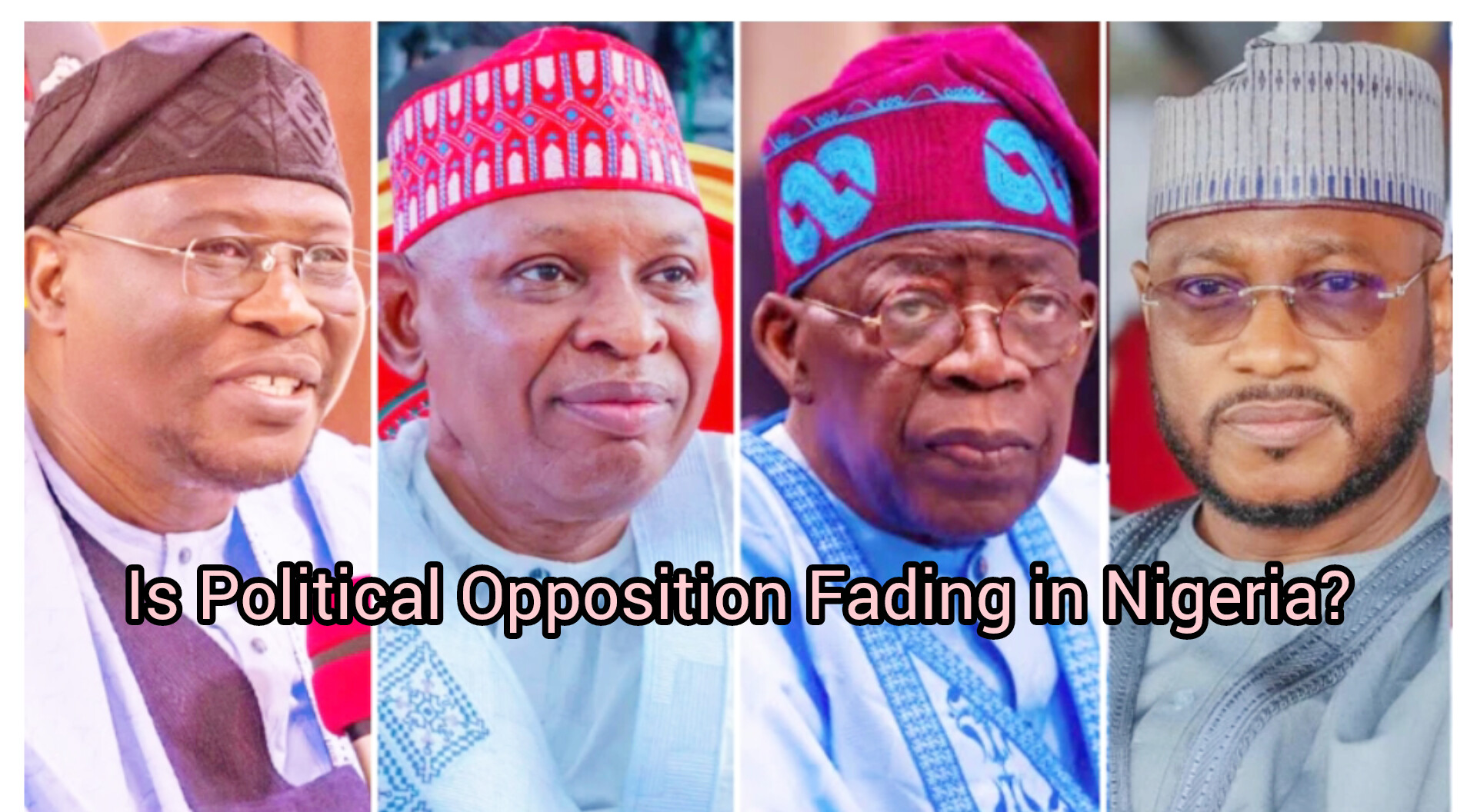
The short answer is no, but it is currently in a state of extreme fragmentation and fragility. For an effective democracy, the opposition must act as a watchdog, but several factors are currently neutralizing that role in Nigeria.
1.Internal Crises and Leadership Tussles
The major opposition parties—the PDP, Labour Party (LP), and NNPP—are all currently battling internal leadership conflicts. Instead of focusing on government policies (like the removal of subsidies or currency floating), these parties are spent fighting court cases against their own members. This “internal bleeding” makes it difficult to present a united front against the ruling party.
2.The Culture of
Defection” (Cross-Carpeting)Nigeria has a unique political culture where politicians often move to the ruling party immediately after an election. This is frequently done to:
- Secure government patronage or contracts.
- Seek protection from anti-corruption agencies.
- Remain “relevant” in the corridors of power.
This trend effectively turns Nigeria into a de facto one-party state, even though many parties exist on paper.
3.The “Third Force” Phenomenon
The 2023 elections showed that the opposition isn’t dead; it just shifted. The rise of the Labour Party and the “Obidient” movement proved that Nigerians are looking for alternatives outside the traditional PDP/APC structure. However, the challenge remains whether this “Third Force” can sustain its momentum until the next election cycle without a structured grassroots foundation.
4.The Role of the Judiciary and INEC
There is a growing perception that opposition is becoming “futile” because of the legal hurdles involved in challenging elections. When candidates feel they cannot win at the polls or in the courts, they lose the incentive to remain in active opposition, leading to political apathy or surrendering to the status quo.
Is there hope for a comeback?
Opposition in Nigeria is currently reactive rather than proactive. However, it is not over. History shows that when economic or social pressures reach a boiling point, the opposition usually finds a way to merge or form a coalition (Merger). We are already hearing whispers of “The Big Merger” for 2027.
Key Takeaway: The opposition isn’t disappearing; it is currently unorganized. The real opposition in Nigeria today is arguably coming from the citizens and civil society on social media, rather than from the political parties themselves.
We want to hear from you! Which story stood out to you today? Drop your opinions in the comments!